When checking out, simply select the "New Customer" option. All you need to get started is a valid email address and a secure password of your choosing. After your purchase is complete, your account will be created, and you will immediately gain all the benefits of being an account holder. If you have previously placed an order with us as a guest, you can try using the "Forgot Password" feature under the "Sign In" tab.
Benefits of having an account:
Real-time status updates on all your orders and returns.
Ability to view detailed order history.
Eligibility to enroll in subscription items for recurring discounts.
Access to more store features and quicker customer support.
Connection to a dedicated sales representative if placing bulk orders.
Manage your account settings:
Update your email address and password.
Unsubscribe from email promotions.
Manage item subscriptions.
Delete your account and remove your information.
We respect your privacy and are committed to protecting any personal information you may provide us through our Website. View our privacy policy for more info.
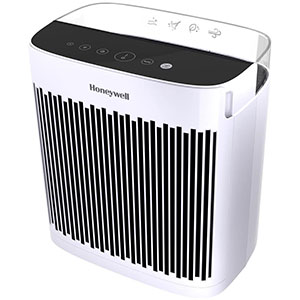
Seasonal pollen, pet dander, dust-mite debris and other microscopic particles can remain suspended in indoor air long after they enter a room. A properly sized Honeywell True HEPA air purifier can help reduce these airborne triggers by repeatedly drawing room air through a high-efficiency filtration system.
So, do air purifiers help with allergies? They can help lower the amount of airborne particle pollution in a room, and studies involving portable HEPA air cleaners have reported improvement in one or more allergy or asthma symptoms. However, results vary, improvements are not always noticeable and an air purifier cannot remove allergens that remain embedded in bedding, carpeting or upholstered furniture.
This guide explains how to choose and operate a Honeywell air purifier for allergies, use Allergen Mode effectively, improve bedroom filtration and maintain the filters during peak pollen or pet-shedding seasons.
The Allergy-Relief Bottom Line
Use a properly sized True HEPA air purifier for airborne pollen, pet dander and dust-mite debris.
Run Allergen Mode during high-pollen periods or heavy pet shedding.
Operate the purifier continuously in the bedroom when nighttime symptoms are a concern.
Keep windows closed when outdoor pollen counts are elevated.
Combine air filtration with vacuuming, laundering bedding and controlling the allergen source.
An air purifier is most effective as one part of a broader allergen-reduction routine. It does not replace prescribed allergy or asthma treatment.
How True HEPA Filters Combat Airborne Allergens
A True HEPA filter is a strong starting point when selecting an air purifier for seasonal allergy relief. HEPA is a standardized type of pleated mechanical filtration capable of theoretically removing at least 99.97% of airborne particles measuring 0.3 microns from the air that passes through the filter. Particles both larger and smaller than 0.3 microns may be captured with even greater efficiency.
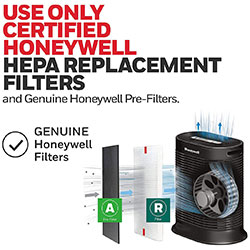
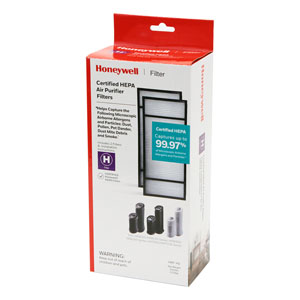
Honeywell Filter R and other compatible Honeywell True HEPA filters use dense fiber media to capture microscopic particles as the purifier circulates room air. Official Honeywell specifications state that Filter R captures up to 99.97% of airborne particles at 0.3 microns from the air passing through it.
How Large Are Common Airborne Allergens?
Common Allergen Particle Sizes
Airborne Allergen
Approximate Particle Size
How a True HEPA Filter Helps
Tree, grass and weed pollen
Often approximately 10–100 microns, although pollen sizes vary widely by plant
Captures airborne pollen grains as they pass through the filter.
Dust-mite allergen debris
Frequently carried on particles around 10–40 microns, with some allergen present on smaller particles
Captures airborne debris stirred up by walking, cleaning or disturbing bedding.
Pet-allergen particles
May be carried on particles smaller than 5 microns as well as particles larger than 9–10 microns
Helps capture lightweight allergen-bearing particles that can remain airborne.
HEPA reference particle
0.3 micron
A qualifying HEPA filter captures at least 99.97% at this especially challenging particle size.
Pollen grains can range from several microns to tens or even hundreds of microns. Research has also found that much dust-mite allergen is associated with particles in the 10-to-40-micron range, while airborne cat allergen can be carried by both small particles below 4.7 microns and larger particles above 9 microns.
Why 0.3 Microns Does Not Mean Smaller Particles Escape
The 0.3-micron rating is commonly misunderstood as the smallest particle a HEPA filter can capture. It is instead used as a demanding test size near the filter's most penetrating particle range. Smaller particles often move unpredictably through the air and collide with filter fibers through diffusion, while larger particles are captured through interception and impaction.
What a Honeywell Allergy Air Purifier Can Capture
A compatible Honeywell True HEPA air purifier can help capture the following airborne particles after they are drawn into the purifier:
Tree, grass and weed pollen
Pet dander and allergen-bearing particles
Dust-mite debris that becomes airborne
Airborne household dust
Mold spores
Fine smoke particles
Models with an activated carbon pre-filter can also help capture larger particles, such as pet fur, lint and visible dust, while reducing certain household odors. The carbon layer and True HEPA filter perform different but complementary jobs.
Using Honeywell Allergen Mode
Many HPA Series Honeywell air purifiers feature a dedicated Allergen Mode. Honeywell describes this setting as optimizing allergen-capturing performance during allergen season. It is a higher standard cleaning level that moves room air through the filters more rapidly than the quieter Germ and General Clean settings.
When to Use Each Honeywell Cleaning Level
Germ or Quiet Clean
Use the lowest cleaning level for quieter continuous operation, particularly while sleeping. Air circulates more slowly than it does on the higher settings, but the purifier can continue filtering throughout the night.
General Clean
Use this medium setting for ordinary daily filtration when pollen and pet-allergen conditions are moderate.
Allergen or Pollen
Use this higher cleaning level during seasonal pollen peaks, after outdoor activity, while cleaning, or during periods of heavy pet shedding. Faster airflow increases the amount of room air processed each minute.
Turbo
Use Turbo temporarily when you want maximum airflow, such as after opening windows, vacuuming, changing bedding or allowing a pet into the bedroom. Honeywell identifies Turbo as the purifier's highest-speed setting.
Honeywell Allergen Mode Speed vs. Turbo
Allergen Mode is designed for sustained high-level particle filtration, while Turbo provides the maximum available fan speed. A practical allergy-season routine is to run Turbo for an initial burst after allergens are disturbed, then switch to Allergen Mode for continued filtration.
If noise makes you less likely to operate the purifier continuously, choose the highest setting you can comfortably tolerate. A purifier filters more total air when it is left running for longer periods.
Air Purifiers for Bedroom Allergies
Bedrooms can accumulate pollen carried indoors on clothing and hair, pet allergens, household dust and dust-mite debris from bedding. Because people spend several continuous hours sleeping in the same room, consistent overnight filtration can be particularly useful.
Bedroom Allergy Optimization Guide
Choose the correct purifier size: Match the air purifier's certified room coverage and CADR to the bedroom's square footage.
Close exterior windows: Keep windows closed when outdoor pollen or smoke levels are elevated.
Run a higher setting before bed: Operate Allergen or Turbo Mode for approximately 30 to 60 minutes before sleeping.
Switch to a quiet overnight setting: Select Germ, Quiet Clean or another comfortable speed for continuous nighttime filtration.
Place the purifier several feet from the bed: Position the clean-air outlet generally toward the occupied area without directing a strong draft at your face.
Keep airflow open: Do not block the intake or outlet with bedding, curtains, furniture or clothing.
Reduce bedroom allergen reservoirs: Wash bedding regularly, vacuum with appropriate filtration and keep pets off the bed when pet allergies are a concern.
Can Air Purifiers Stop Sneezing at Night?
An air purifier may help reduce nighttime exposure to airborne allergens, but it cannot guarantee that sneezing, congestion or itchy eyes will stop. Symptoms may also be triggered by allergens embedded in pillows, mattresses, carpeting and bedding, or by non-allergic causes.
If nighttime symptoms persist, combine filtration with regular bedding care, allergen-proof mattress and pillow covers when appropriate, humidity control and medical guidance.
Best Air Purifier for Pet Allergies
The best air purifier for pet allergies should combine a properly sized True HEPA filter with enough airflow to repeatedly circulate the room's air. Pet dander is not the same as visible pet hair. Allergens are often carried on very small skin flakes, saliva proteins and other lightweight particles that can remain suspended or become airborne again when furniture and carpeting are disturbed.
Pet-Allergy Air Purifier Checklist
Choose True HEPA filtration rather than relying only on a basic mesh filter.
Select a purifier rated for the entire enclosed room.
Use Allergen Mode during shedding periods.
Run Turbo after vacuuming or brushing a pet.
Use a carbon pre-filter to capture larger pet fur and help reduce pet odors.
Replace the pre-filter sooner if it becomes visibly covered with hair or dust.
Combine filtration with surface cleaning and regular pet grooming.
An air purifier captures only particles that become airborne and travel through its filter. It will not remove pet dander already attached to carpets, sofas, bedding or clothing.
Air Purifiers for Dust Mites and Pollen
Pollen
Pollen can enter through open windows and doors or be carried indoors on shoes, clothing, hair and pets. Once airborne, pollen grains are generally large enough for True HEPA filtration, but settled pollen must first become airborne and reach the purifier.
During high-pollen periods, keep exterior windows closed, change clothes after extended outdoor activity and run the purifier on Allergen Mode.
Dust Mites
Air purifiers do not remove living dust mites from mattresses, pillows, upholstered furniture or carpeting. They can help capture dust-mite debris and allergen-bearing particles after those materials become airborne.
For dust-mite control, combine air filtration with regular hot-water laundering where fabric instructions permit, humidity management, vacuuming and allergen-resistant bedding covers.
Choosing the Best Air Purifier for Allergies
Allergy Air Purifier Buying Checklist
True HEPA filtration: Confirm that the purifier uses certified high-efficiency particle filtration.
Correct room size: Choose a unit whose certified square-foot coverage matches or exceeds the room.
Strong CADR: Higher CADR means the purifier delivers more filtered air per minute.
Allergen or Pollen Mode: Look for a dedicated high cleaning setting for seasonal particle events.
Quiet overnight operation: Select a unit you can comfortably run while sleeping.
Carbon pre-filtration: This helps capture larger debris and reduce certain odors.
Available replacement filters: Verify filter type, replacement frequency and ongoing cost.
Filter Maintenance for Peak Allergy Performance
An allergy air purifier cannot maintain its intended airflow when the filters are overloaded with dust, hair and other captured particles. Check the filters regularly during pollen season, in homes with pets or when the purifier operates continuously.
Honeywell Allergy Filter Schedule
Filter or Maintenance Item
Typical Interval
Purpose
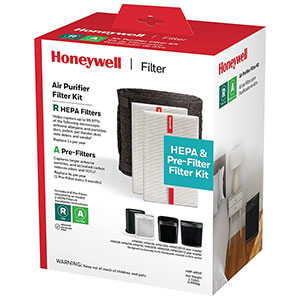
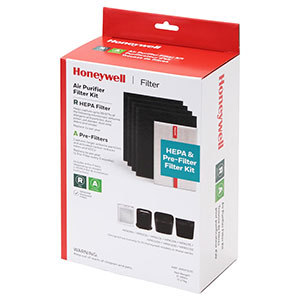
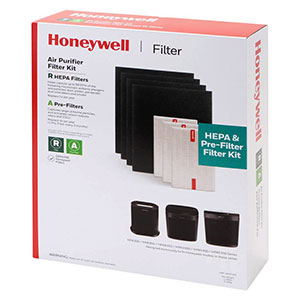
Filter A carbon pre-filter
Approximately every 3 months
Captures larger particles, lint, fibers and pet fur while helping reduce odors.
Filter R True HEPA filter
Approximately every 12 months
Captures microscopic airborne particles as air passes through the filter.
Exterior intake grille
Inspect monthly
Prevents surface dust from restricting intake airflow.
Room placement
Check whenever furniture is moved
Keeps the purifier's intake and outlet unobstructed.
Honeywell recommends replacing Filter A every three months and Filter R once per year under typical conditions. High dust, pollen, pet-hair or smoke concentrations may require more frequent maintenance.
Signs an Allergy Filter May Need Early Replacement
Airflow feels weaker than usual.
The pre-filter is heavily covered with pet hair or visible dust.
The purifier sounds strained at a normal fan speed.
Particles or odors appear to linger longer than before.
The Filter Check reminder is illuminated.
Do not wash or vacuum disposable Honeywell Filter R or Filter A media. Honeywell states that cleaning these disposable filters can reduce their effectiveness.
Additional Ways to Reduce Indoor Allergens
Air filtration works best when fewer allergens are continually released into the room. During allergy season:
Keep exterior windows closed when pollen counts are high.
Remove shoes near the entrance.
Change clothing after prolonged outdoor activity.
Shower or rinse hair before bed when pollen exposure is heavy.
Wash bedding regularly.
Vacuum carpets, rugs and upholstery using appropriate filtration.
Repair moisture problems that permit mold growth.
Keep indoor humidity controlled to discourage dust mites and mold.
Filtration does not replace source control or clean-air ventilation when outdoor conditions permit. EPA recommends combining portable air cleaners with reducing pollution sources and ventilating with clean outdoor air.
Frequently Asked Questions
How long does it take an air purifier to clear allergens from a room?
There is no universal cleaning time. Performance depends on the purifier's CADR, room size, ceiling height, fan speed, placement, filter condition and whether allergens are continuing to enter the room. Run Allergen or Turbo Mode initially, then keep the purifier operating continuously for ongoing filtration.
Can I open my windows while running an allergy air purifier?
You can, but opening windows during high-pollen conditions continually introduces new allergens and makes it harder for the purifier to lower indoor concentrations. Keep windows closed when outdoor pollen or smoke levels are elevated, then ventilate when outdoor air is cleaner.
Will an air purifier help with pet dander already on carpets?
Not directly. An air purifier captures pet-allergen particles only after they become airborne and enter the filtration system. Vacuum carpets and upholstery, wash pet bedding and clean surfaces to remove settled allergens.
Should I use Germ Mode or Allergen Mode while sleeping?
Use Allergen Mode before bedtime when pollen or pet-dander levels are high, then switch to Germ or Quiet Clean if you need quieter overnight operation. If the higher setting does not disturb your sleep, leaving Allergen Mode on will process more room air.
Can an air purifier completely eliminate indoor allergies?
No. A purifier can reduce certain airborne allergens but cannot remove every trigger or prevent every symptom. Allergens can remain on bedding, furniture, carpets, clothing and pets. Combine filtration with source control, surface cleaning and appropriate medical care.
Does an air purifier remove living dust mites?
No. Dust mites generally live in mattresses, pillows, upholstery and carpeting. An air purifier may capture their airborne debris after it is disturbed, but bedding care, humidity control and cleaning are required to address the source.
Where should I place an air purifier for bedroom allergies?
Place it several feet from the bed in an open location where the intake and clean-air outlet are not blocked. Aim the general airflow toward the occupied part of the room without directing a strong draft at your face, and keep the unit away from curtains and bedding.
Can I run my Honeywell air purifier all night?
Compatible Honeywell room air purifiers can generally be used continuously when operated according to their owner's manuals. Overnight operation provides repeated filtration, and a lower setting or control-panel dimmer can make bedroom use more comfortable.
Why am I still sneezing when the air purifier is running?
The purifier may be undersized, poorly positioned or operating at too low a speed, or the filters may need maintenance. Symptoms may also come from allergens settled on bedding and surfaces or from a cause unrelated to airborne allergens. Persistent or severe symptoms should be discussed with a healthcare professional.
Explore Honeywell air purifier guides to troubleshoot common questions, find compatible replacement filters, and create a cleaner and more comfortable indoor environment.
Contact options may differ depending on the type of help you need.
Cookie Preferences
This site uses a small number of cookies to provide a secure and reliable shopping experience.
Required cookies are set directly by this site and are used only for essential store functions such as maintaining your shopping cart, processing checkout, providing security, and keeping the site working properly. We also use optional Google cookies for website analytics and advertising measurement. You can choose whether to allow these Google cookies below.
Required Cookies
These cookies are necessary for essential website functions, including your shopping cart, checkout, site security, and maintaining your shopping session. These cookies are set directly by this site and cannot be disabled.
Always Active
Google Analytics & Advertising Cookies
We use Google services to understand how customers use this site, improve site performance and navigation, and measure the effectiveness of our advertising. These cookies are optional. Turning them off will not affect your ability to browse, shop, or complete an order.
Learn more about how we protect your information in our Privacy Policy.