



Humidifier Guides and Support
Find Honeywell humidifier setup, cleaning, filter, water, indicator light, white dust, buying, and troubleshooting guides for common models and types.
Related Topics:
Choosing between Honeywell warm mist, cool moisture, and cool mist humidifiers starts with understanding how each technology adds moisture to the air. All three can help relieve discomfort caused by an overly dry indoor environment, but they differ in sound, safety, energy consumption, water requirements, and maintenance.
This guide explains the Honeywell warm mist vs cool mist comparison, including the important difference between evaporative cool moisture and ultrasonic cool mist. Because features and room-size ratings vary by model, always confirm the specifications and instructions in your humidifier’s owner’s manual before purchasing or operating the unit.
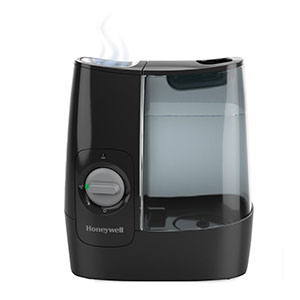
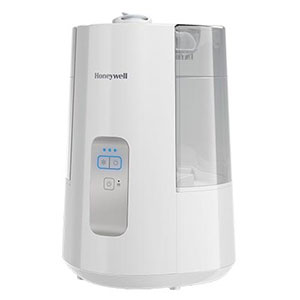
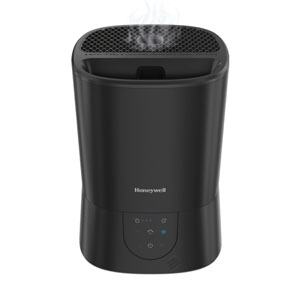
A Honeywell warm-mist humidifier feeds water from its tank into a heating chamber. An internal heating element brings the water to a boil, producing steam vapor that mixes with room air before leaving the mist outlet as warm, visible moisture.
Heating the water can reduce many microorganisms in the emitted mist, but the output should not be described as completely sterile or bacteria-free. Regular cleaning is still essential. Dissolved minerals do not simply disappear during boiling; they remain in the heating chamber and gradually form scale on the heating element.
Keep warm-mist humidifiers out of reach of children and pets. Place the unit on a firm, level, water-resistant surface where it cannot be pulled down by its cord or knocked over. Do not touch the steam outlet while the unit is operating.
For nurseries, toddlers’ rooms, and other areas where a child or pet could reach the appliance, a cool-mist humidifier is the safer choice.
A search for a Honeywell medicine cup inhalant model usually refers to a warm-mist humidifier with a separate accessory cup. For example, compatible HWM845-series units have an essential oil cup that can hold a few drops of liquid inhalant or essential oil for passive evaporation.
Use only the cup or accessory location identified in the model’s manual. Products such as Vicks VapoSteam may be used only when the humidifier instructions and inhalant label permit it. Never pour liquid inhalants, medication, essential oils, or other additives into the tank, reservoir, boiling chamber, or mist chimney.
People searching for a Honeywell warm mist humidifier for croup should understand that a humidifier does not treat the airway swelling that causes croup. Adding moisture may make dry indoor air more comfortable, but warm-mist units introduce a serious scalding hazard around children.
For a child’s room, pediatric safety guidance generally favors a properly cleaned cool-mist humidifier. Seek prompt medical guidance if a child has noisy breathing or stridor, difficulty breathing, blue or gray coloring, drooling, unusual sleepiness, or worsening symptoms.
Although the terms are sometimes used interchangeably, Honeywell commonly uses them to describe two different technologies. Understanding cool moisture vs cool mist prevents confusion when comparing filters, visible output, sound, and water requirements.
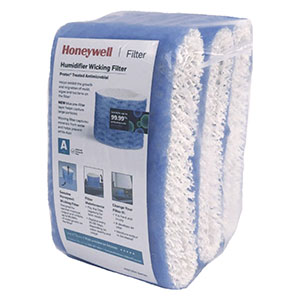
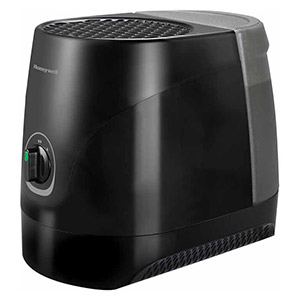
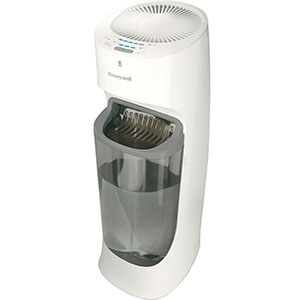
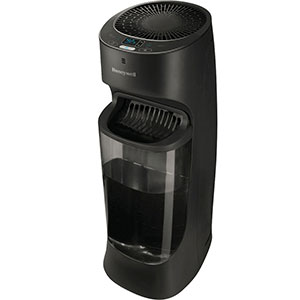
A Honeywell cool-moisture humidifier draws water from the base into a porous wicking filter. A fan pulls dry room air through the wet wick, causing water to evaporate into the room as invisible moisture. Minerals are largely trapped in the filter rather than dispersed with the moisture.
Evaporative humidification is naturally self-regulating. As room humidity increases, the air absorbs moisture more slowly. The appliance may continue running, but evaporation becomes less efficient as the room approaches a higher humidity level.
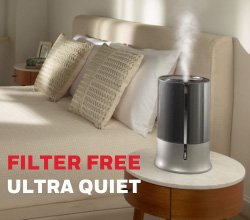
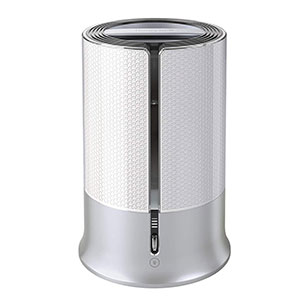
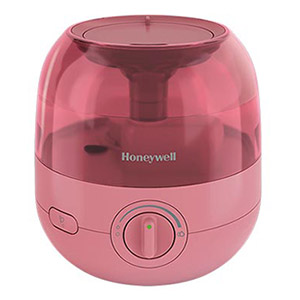
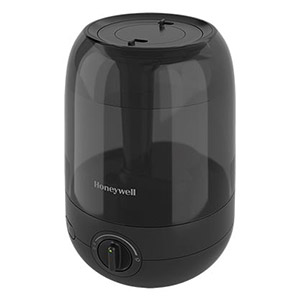
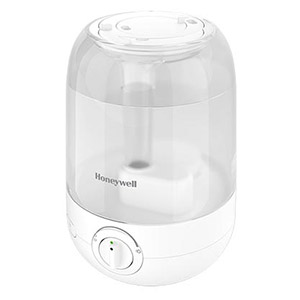
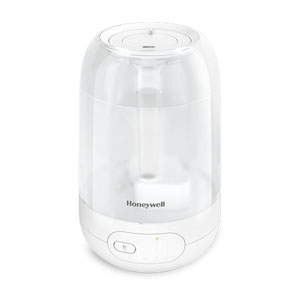
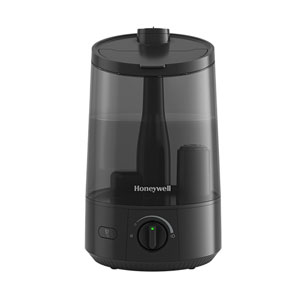
An ultrasonic Honeywell humidifier uses a small metal nebulizer that vibrates at an extremely high frequency. Those vibrations break water into fine droplets that leave the appliance as a visible cool mist. Most ultrasonic models operate without a traditional wicking filter.
In the ultrasonic vs evaporative humidifier comparison, ultrasonic units are usually quieter and require no wick replacement. However, their visible mist can carry dissolved minerals from hard tap water into the room. Once the water evaporates, those minerals may settle on nearby surfaces as white dust.
| Feature | Warm Mist | Cool Moisture | Cool Mist |
|---|---|---|---|
| Technology | Heating element boils water and releases warm steam vapor | Fan moves air through a saturated wicking filter | Ultrasonic nebulizer creates fine, visible water droplets |
| Sound Level | Quiet, with possible boiling or gurgling sounds | Audible fan noise that varies by speed | Very quiet, with a faint hum or occasional water sound |
| Maintenance and Filters | Usually filter-free; heating element requires descaling | Requires wick inspection, flipping, and periodic replacement | Usually filter-free; nebulizer and reservoir require descaling |
| Kids and Pets | Hot water and steam create a burn risk; keep out of reach | No hot-water burn hazard; suitable for family areas when safely placed | No hot-water burn hazard; suitable for family areas when safely placed |
| Energy Use | Highest because water must be heated | Moderate due to continuous fan operation | Typically low |
| Mineral Dust | Low; minerals remain mainly in the heating chamber as scale | Low; the wick captures much of the mineral content | Possible with hard tap water; distilled water helps reduce it |
| Typical Room Fit | Often selected for small or medium rooms | Available for medium rooms and larger living areas | Available in personal, small-room, and larger-room designs |
| Medicine Cup Feature | Available on select models | Usually not included; some models may use separate scent pads | Varies by model; use only the designated accessory tray |
| Best For | Quiet warm vapor and users who want a compatible inhalant cup | Hard-water homes, reduced white dust, and broader room coverage | Quiet bedrooms, offices, and filter-free operation |
A cool mist humidifier for nursery use is generally the safest choice because it does not contain boiling water or release hot steam. Both evaporative cool-moisture and ultrasonic models can be suitable when positioned securely and cleaned according to the manual.
Both warm and cool-mist humidifiers can add moisture to dry indoor air. By the time humidified air reaches the lower respiratory tract, the original mist temperature provides little practical difference in overall humidification. The decision should therefore focus on safety, comfort, noise, maintenance, and accessory preferences.
There is no universal best Honeywell humidifier for asthma. A humidifier may help when indoor air is uncomfortably dry, but excessive humidity, dirty water, mineral aerosols, mold, and neglected filters can aggravate respiratory symptoms.
An evaporative wicking humidifier is often the most practical option when tap water contains substantial mineral content. The wick holds much of that mineral material inside the unit instead of releasing it as white dust. The tradeoff is that the filter may need more frequent replacement.
A warm-mist humidifier also limits airborne mineral dust, but scale will collect on its heating element. An ultrasonic unit can still be used in a hard-water area when filled with distilled water and descaled regularly.
Ultrasonic humidifiers are normally the quietest choice. Warm-mist units are also relatively quiet because they do not use a fan, although heating and boiling sounds may be noticeable. Evaporative models provide excellent humidification but produce more consistent fan noise.
Start with the manufacturer’s published room-size rating rather than choosing solely by mist technology. Honeywell evaporative consoles and towers are frequently designed for medium or large areas, while many compact warm-mist and ultrasonic models are intended for smaller rooms. Coverage varies considerably between individual models.
In the Honeywell warm mist vs cool mist decision, no single technology is right for every room. Warm mist offers quiet, warm vapor and may include an inhalant cup, but its hot water makes it unsuitable for locations accessible to young children or pets. Evaporative cool moisture is a practical choice for hard water and larger spaces, while ultrasonic cool mist provides the quietest operation and avoids replacement wicks.
Choose according to room size, household safety, water quality, sound preference, and the amount of maintenance you are prepared to perform. Whichever type you select, clean it regularly, use only approved accessories, and keep indoor humidity below the point where condensation develops.
Explore related support articles and resources for this topic.
Find Honeywell humidifier setup, cleaning, filter, water, indicator light, white dust, buying, and troubleshooting guides for common models and types.
Contact options may differ depending on the type of help you need.