





Humidifier Guides and Support
Find Honeywell humidifier setup, cleaning, filter, water, indicator light, white dust, buying, and troubleshooting guides for common models and types.
Related Topics:

Regular cleaning removes mineral scale, helps control mold and bacteria, and keeps a Honeywell Humidifier operating effectively. This guide explains how to clean Honeywell humidifier tanks, reservoirs, wicking-filter compartments and ultrasonic nebulizers using separate descaling and disinfecting procedures.
Cleaning instructions can vary by model. Before beginning, locate the humidifier’s model number and consult its owner’s manual to confirm which parts are removable, washable or dishwasher safe.
SAFETY WARNING: Never mix vinegar and bleach together. Combining chlorine bleach with an acid such as vinegar can release dangerous chlorine gas. Complete the vinegar process, drain the unit and rinse it thoroughly before beginning the separate bleach process.
Honeywell generally recommends weekly cleaning during regular use. More frequent cleaning may be necessary if the home has hard water, visible mineral buildup, a musty odor, slimy residue or discoloration inside the tank.
Do not repeatedly add new water to old tank water. A daily rinse and refill helps limit the accumulation of scale, slime and microorganisms between weekly cleanings.
Weekly maintenance involves two separate processes:
Do not combine these steps or their cleaning solutions. Thoroughly rinse away all vinegar before introducing bleach.
Honeywell humidifier vinegar cleaning is designed to loosen scale left behind when water evaporates. These deposits may appear as a white, gray or brown crust inside the tank, reservoir, heating chamber or around an ultrasonic nebulizer.
Never pour vinegar into the fan opening, control panel, power connection or another electrical area. Do not submerge the humidifier base unless the owner’s manual specifically identifies it as dishwasher safe or fully washable.
To clean Honeywell cool mist evaporative humidifiers, remove the wicking filter before vinegar or bleach touches the unit. Vinegar can damage the filter’s material and reduce its ability to absorb water.
After removing the filter, descale the water tank and designated base reservoir with vinegar. Rinse all treated surfaces thoroughly before reinstalling the filter. If the filter has become rigid or encrusted with minerals, it can sometimes be temporarily loosened by soaking it in cool water only. Do not add vinegar, bleach or soap.
Replace a filter that remains hard, produces an odor, has visible damage or no longer absorbs water effectively.
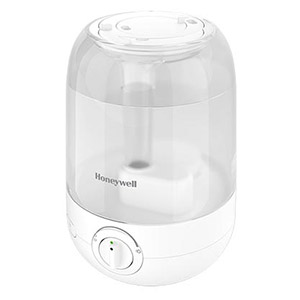
To descale Honeywell ultrasonic nebulizer components, first identify the small round disc located in the base reservoir. Mineral deposits on this disc can reduce visible mist output or prevent the humidifier from producing mist.
Avoid pressing forcefully on the nebulizer disc. It is a sensitive operating component and can be damaged by aggressive scrubbing.
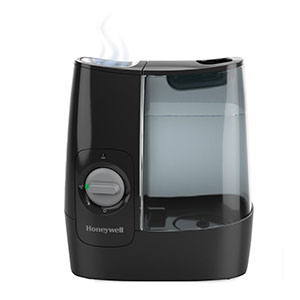
Mineral scale can collect on a warm-mist humidifier’s heating element and reduce performance. After the humidifier has been unplugged and allowed to cool completely, add undiluted white vinegar to the heating chamber as directed by the manual. Let the element soak for at least 20 minutes, gently remove loosened scale with a soft brush, and rinse thoroughly.
Do not scrape a heating element with sharp or metal objects. If heavy scale remains, repeat the vinegar soak instead of increasing scrubbing pressure.
How do you clean a Honeywell humidifier after mineral scale has been removed? The second stage is a separate bleach disinfection cycle. This helps sanitize the tank and water-contact reservoir surfaces after descaling.
If you are researching how to disinfect Honeywell humidifier bleach procedures, the commonly specified Honeywell dilution is 1 teaspoon of liquid chlorine bleach per 1 gallon of water. Do not use more bleach than directed. If the model’s manual specifies a different volume, follow that model-specific instruction.
Never pour bleach directly into vinegar or into a humidifier that still contains vinegar residue.
Do not operate the humidifier to disperse the bleach solution. The solution must be completely emptied and rinsed away before the unit is returned to service.
To clean mold from Honeywell humidifier tanks or reservoirs, first discard the water and complete the separate vinegar descaling process. After rinsing away the vinegar, use the diluted bleach procedure to sanitize compatible water-contact surfaces.
Pay close attention to tank corners, the underside of the cap, seals, float components and other areas where water can remain. Use a soft brush or cotton swab where permitted by the manual.
If mold remains inside an area that cannot be safely reached or rinsed, discontinue use until the affected component can be replaced. A cracked, permanently contaminated or heavily stained tank should not be returned to normal operation merely because the visible surface was wiped.
If the humidifier will not be used immediately, leave the tank and washable components open to air-dry instead of refilling them.
Before storing a humidifier for the season, complete both the vinegar descaling and bleach disinfection procedures. Rinse the unit thoroughly and allow every component to become completely dry.
Storing damp components can encourage mold growth and create odors. Parts should be 100% dry before the unit is packed or placed in a closed storage area.
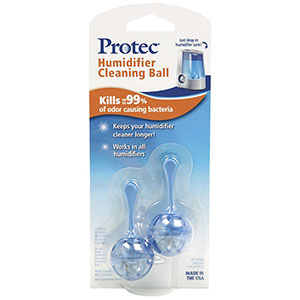
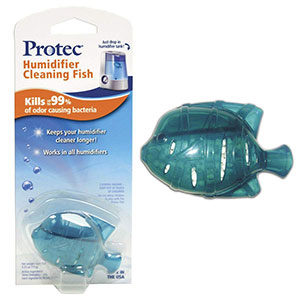
A Honeywell Protec cleaning ball—also called a Protec Antimicrobial Cleaning Cartridge—can help keep tank water fresher between cleanings. The PC2 cartridge is placed directly in the water tank and helps inhibit the growth of odor-causing bacteria, mold and slime on humidifier surfaces.
The Honeywell Protec Antimicrobial Cleaning Cartridge does not replace daily rinsing, weekly descaling, disinfecting or wicking-filter replacement. It is an added maintenance accessory intended to help extend freshness between regular cleanings.
Continue rinsing the treated components with fresh water until the vinegar odor disappears. Do not add bleach while any vinegar or vinegar odor remains.
Do not operate the humidifier. Rinse the tank and reservoir repeatedly with fresh water until the bleach smell is completely gone.
Repeat the vinegar soak and use a soft brush to loosen the remaining deposits. Do not use a knife, screwdriver, metal brush or abrasive pad on the nebulizer, heating element or plastic reservoir.
Some mineral discoloration can occur during normal use. Soaking the wick in cool water may temporarily loosen mineral buildup, but vinegar, bleach and soap should never be used. Replace the filter if it remains hard, develops an odor or produces noticeably lower moisture output.
Empty and rinse the tank daily, avoid leaving stagnant water in the humidifier and complete weekly cleaning. Make sure all components dry fully when the unit is not in use. A compatible Protec cartridge may help extend freshness, but recurring contamination may require replacement of the affected tank or component.
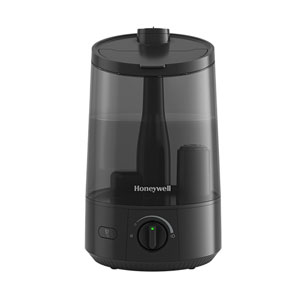
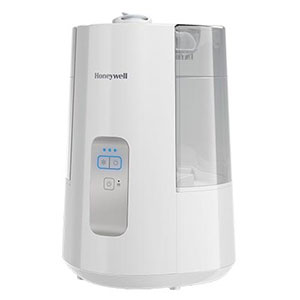
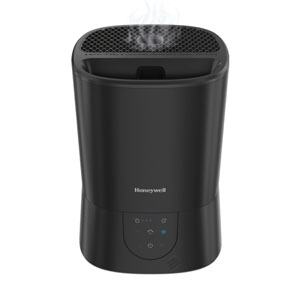
Explore related support articles and resources for this topic.
Find Honeywell humidifier setup, cleaning, filter, water, indicator light, white dust, buying, and troubleshooting guides for common models and types.
Contact options may differ depending on the type of help you need.